
No Interest if Paid in Full in 6 Months
Rates range from 17.99% – 24.99% APR.
Promotional period — interest waived if you pay the full balance within 6 months of approval.
Plan 2601
Apply Now →
RESOURCES · KC FENCE GUIDES
Materials, post depth, permits, cost, and maintenance — everything that decides whether your fence lasts two decades or two winters.
Planning a Kansas City fence installation is a bigger decision than most homeowners expect. Our local soil moves, our winters swing hard, and our spring storms test every post. Get the material, the permits, and the post depth right, and your fence can last for decades. Get them wrong, and you'll be fixing leaning posts within a couple of seasons. This guide reflects what we've learned building 150+ fences across the metro since 2021, and it's written to help you hire well and build once.
Key Takeaways
There's no universal best fence, but cedar remains the metro's most popular choice for privacy and value. The right pick depends on your budget, maintenance tolerance, and goals. In our experience, roughly two of every three residential jobs we quote in the KC area involve cedar privacy fencing, with vinyl and ornamental options close behind.
In short
Across the Kansas City metro, cedar privacy fencing is the most requested residential material, chosen for its natural look, wind performance, and stainability. Based on RKC Wood Care Pros project data from 150+ installs since 2021, cedar and vinyl together account for the majority of local homeowner fence projects.
Cedar is the workhorse of KC backyards. It's naturally rot- and insect-resistant, takes stain beautifully, and handles our wind loads well when built with proper post spacing. The tradeoff is maintenance: cedar needs staining or sealing every few years to hold its color and resist moisture. Left bare, it weathers to a silver-gray and shortens its own lifespan. Our wood fence installation page breaks down cedar grades, board styles, and what each costs.
Vinyl appeals to homeowners who want privacy without upkeep. It won't rot, warp, or need staining, and quality panels resist our humidity and UV. It costs more upfront than cedar, and cheaper vinyl can crack in extreme cold, so material grade matters. For low-maintenance privacy, it's hard to beat — see vinyl fence installation for the co-extrusion and aluminum-insert specs we use.
Chain link is the budget champion for pet containment and back property lines. Ornamental iron delivers security and a classic look, while aluminum offers a similar appearance without the rust, making it popular for pool enclosures. For pool areas specifically, aluminum usually beats iron in KC because our freeze-thaw moisture accelerates rust on lower-grade iron coatings.
| Material | Avg. lifespan (KC) | Maintenance | Best for | Relative cost |
|---|---|---|---|---|
| Cedar / Wood | 15–25 years | Stain every 2–4 yrs | Privacy, natural look | $$ |
| Vinyl | 20–30+ years | Occasional wash | Low-maintenance privacy | $$$ |
| Chain Link | 15–20 years | Minimal | Pets, budget, back lines | $ |
| Ornamental Iron | 20+ years | Rust touch-ups | Security, curb appeal | $$$ |
| Aluminum | 25–30+ years | Very low | Pools, decorative | $$ |
Lifespan ranges reflect properly installed fences with adequate post depth; figures are general industry ranges, not guarantees.
Kansas City's climate is unusually hard on fences, which is why post depth matters more here than in milder regions. Our region cycles above and below freezing dozens of times each winter. Each cycle expands and contracts the soil around a post, slowly working shallow posts loose.
Typical 24" post
Footing sits inside the freeze zone. Each freeze-thaw cycle lifts it a little further, and the fence starts to lean.
RKC 36"+ post
Footing is anchored below the frost line, where the soil does not freeze — so there is nothing for the ice to grip and lift.
The metro sits largely on expansive Wymore-Grundy clay, which swells when wet and shrinks when dry. The most common failure we're called to fix isn't broken boards — it's posts that have heaved or leaned because they were set too shallow in this clay. The frost line in the Kansas City area typically runs around 30 to 36 inches, so posts set shallower than that sit inside the freeze zone and get pushed upward over time. That's the bulk of our fence repair workload every spring.
Setting posts at 36 inches or deeper anchors them below most frost movement and gives concrete footings enough grip in shifting clay. Add our spring storms, which can bring straight-line winds well over 50 mph, and shallow posts simply don't stand a chance. Depth is the difference between a fence that survives a decade of KC seasons and one that needs re-setting in two.
In short
Kansas City's frost line typically reaches 30 to 36 inches, and the metro's expansive clay soils are well documented in USDA soil survey data. Setting fence posts at 36 inches or deeper places footings below the frost zone, the primary defense against the post heaving and leaning common to shallow local installs.
In most of the Kansas City metro, yes — you'll likely need a permit, HOA approval, or both before building. Requirements vary by jurisdiction, so this is where local knowledge pays off. Kansas City, Missouri, along with Johnson County cities like Olathe, Overland Park, and Shawnee, each set their own rules on height, placement, and setbacks.
Most local codes cap backyard fences around 6 feet and front-yard fences lower, often near 3 to 4 feet, for sightline safety. Many cities require the finished (smooth) side to face your neighbors. Corner lots and easements add restrictions, and building over a utility easement can force a costly removal later. Our property line guide covers surveys, setbacks, and shared-fence agreements in more depth.
You can pull a permit yourself, but a full-service contractor usually manages permits and HOA submittals as part of the job. We handle permit and HOA paperwork for our clients regularly, and it routinely saves them days of back-and-forth and prevents placement mistakes that trigger fines. If your neighborhood has an architectural review board, our HOA fence installation process is built around it.
In short
Kansas City area municipalities, including KCMO and Johnson County cities, regulate fence height, setbacks, and orientation, and many HOAs require separate written approval. Verifying local code before installation prevents costly removal or fines, one reason many homeowners choose a contractor who manages permits and HOA submissions directly.
A professional fence installation follows a repeatable process, and most residential jobs finish in one to three days of build time. Knowing the steps helps you spot a quality contractor from a corner-cutting one.
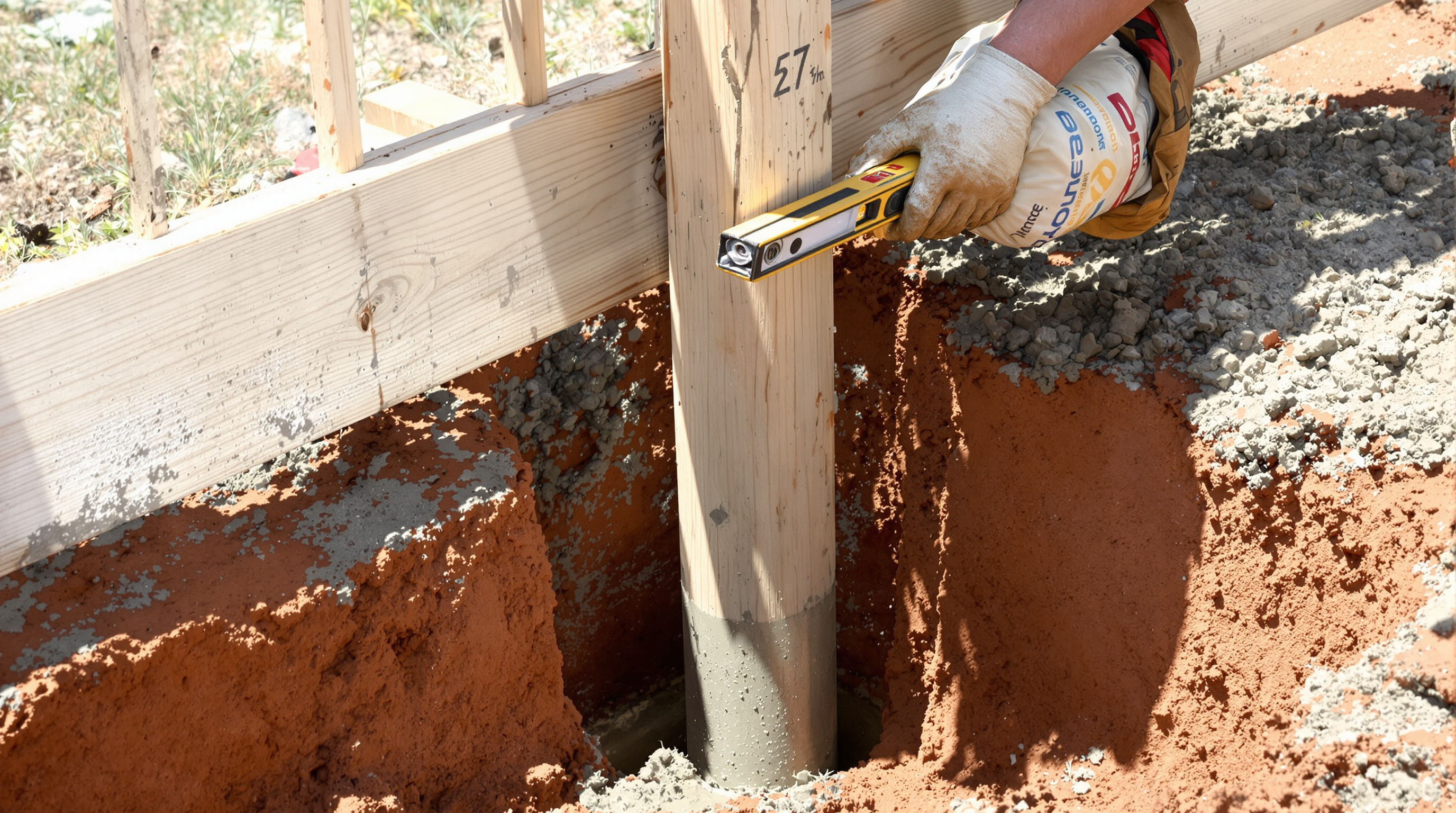
Fence cost in Kansas City varies widely by material, length, terrain, and gates, so any honest answer starts with a site visit. Chain link sits at the low end, cedar in the middle, and ornamental iron at the top. Terrain slope, tree roots, old-fence removal, and the number of gates all move the final number.
Linear footage is the biggest factor, followed by material grade and gate count. Automated or oversized gates, difficult access, and hauling away an old fence add cost. The cheapest bid often skips proper post depth or old-fence disposal, which is why "all-inclusive" estimates that spell out every line item usually beat lowball quotes over the fence's lifetime.
Financing makes larger projects manageable. RKC Wood Care Pros offers plans including no interest if paid in full in 6 months, a fixed 12.99% APR for 120 months, and fixed 7.99% to 19.99% APR terms over 120 months, so you can match payments to your budget. Full terms are on our fence financing page.
Regular staining is the highest-return maintenance you can do on a wood fence, extending its life by years. Cedar and other wood fences should be cleaned and re-stained or sealed every two to four years in our climate, because KC's UV, humidity, and freeze-thaw cycles wear finishes faster than milder regions.
Fall is often the ideal staining window here, once summer humidity drops but before hard freezes. New cedar should weather a few weeks to months so it accepts stain properly. Sealing adds water protection; staining adds color plus UV protection. Many homeowners want both.
Low-maintenance materials still benefit from attention. Vinyl needs an occasional wash, aluminum and chain link need little beyond debris removal, and ornamental iron needs prompt rust touch-ups. In-house staining and sealing, which RKC provides, keeps wood fences protected without you owning the equipment.
In short
In Kansas City's UV- and moisture-heavy climate, wood fences typically need re-staining every two to four years to resist rot and graying. Applying stain in fall, after peak humidity, is a common regional best practice, and professional in-house staining protects the fence investment far longer than leaving cedar bare.
RKC Wood Care Pros has earned a 4.9-star rating from 77+ reviews since launching in 2021, and the reasons trace back to how every fence gets built. Based in Olathe, KS, we serve the full KC metro — including Overland Park, Shawnee, Lee's Summit, and Independence — with a focus on durability over the cheapest bid.
Every project runs under local owner-operator oversight, so the person accountable for quality is actually on site. Posts are set at 36 inches or deeper, engineered specifically for KC freeze-thaw cycles, Wymore-Grundy clay, and high winds. We're licensed and insured, handle permits and HOA approvals, and deliver all-inclusive estimates with no surprise line items. In-house staining and sealing protects your investment long after install, and flexible financing keeps larger projects affordable. From cedar privacy fences to vinyl, chain link, ornamental iron, aluminum, and commercial fencing, it's the widest material range in the metro under one roof.
Fence posts in Kansas City should be set at least 36 inches deep. That places footings below the metro’s typical 30- to 36-inch frost line and the freeze-thaw zone in expansive clay soil. Shallower posts commonly heave or lean within a few seasons, which is the most frequent local fence failure contractors are called to repair.
Usually, yes. Kansas City, MO, and Johnson County cities like Olathe and Overland Park generally require fence permits, and many HOAs require separate written approval. Rules on height, setbacks, and orientation vary by jurisdiction. A full-service contractor typically files permits and HOA submittals for you, preventing fines or forced removal.
Vinyl and aluminum are the top low-maintenance choices for the KC metro. Vinyl resists rot, warping, and fading and only needs an occasional wash, while aluminum won’t rust and suits pool enclosures. Both cost more upfront than cedar or chain link, but they save years of staining and repair in our demanding climate.
A properly installed cedar fence lasts roughly 15 to 25 years in Kansas City when posts are set deep enough and the wood is re-stained every two to four years. Skipping maintenance or setting shallow posts in clay soil shortens that lifespan significantly, often leading to graying, warping, or leaning within a decade.
Fall is often the best time to stain a fence in Kansas City, after summer humidity drops but before hard freezes. New cedar should weather for several weeks so it absorbs stain properly. Staining adds color and UV protection while sealing blocks moisture, and many local homeowners choose both for maximum protection.
Yes. RKC Wood Care Pros offers financing on Kansas City fence projects, including no interest if paid in full within 6 months, a fixed 12.99% APR for 120 months, and fixed 7.99% to 19.99% APR terms over 120 months. Financing lets homeowners match monthly payments to their budget on larger installs.
We walk your property, answer your questions, and put every cost in writing before anything gets dug.
Ready when you are